Best Basement Floor Coatings for Moisture Problems
Basement floor coating failures in Colorado follow a predictable pattern. A homeowner installs what looks like a quality coating system, it performs well for a season or two, and then blistering, peeling, and delamination begin appearing seemingly out of nowhere. When Keas Concrete Coatings evaluates failed basement coatings, the cause is almost always the same: moisture vapor moving through the concrete slab from below was never assessed or addressed before the coating was applied, and the coating failed because of what was happening beneath it rather than anything wrong with the coating itself.
Understanding how moisture affects basement concrete, which coating systems resist moisture-related failure, and what preparation is required before any coating goes down in a below-grade space gives Colorado homeowners the foundation for a basement coating decision that holds up rather than peels up.
Why Basement Moisture Is a Coating Problem Specific to Colorado
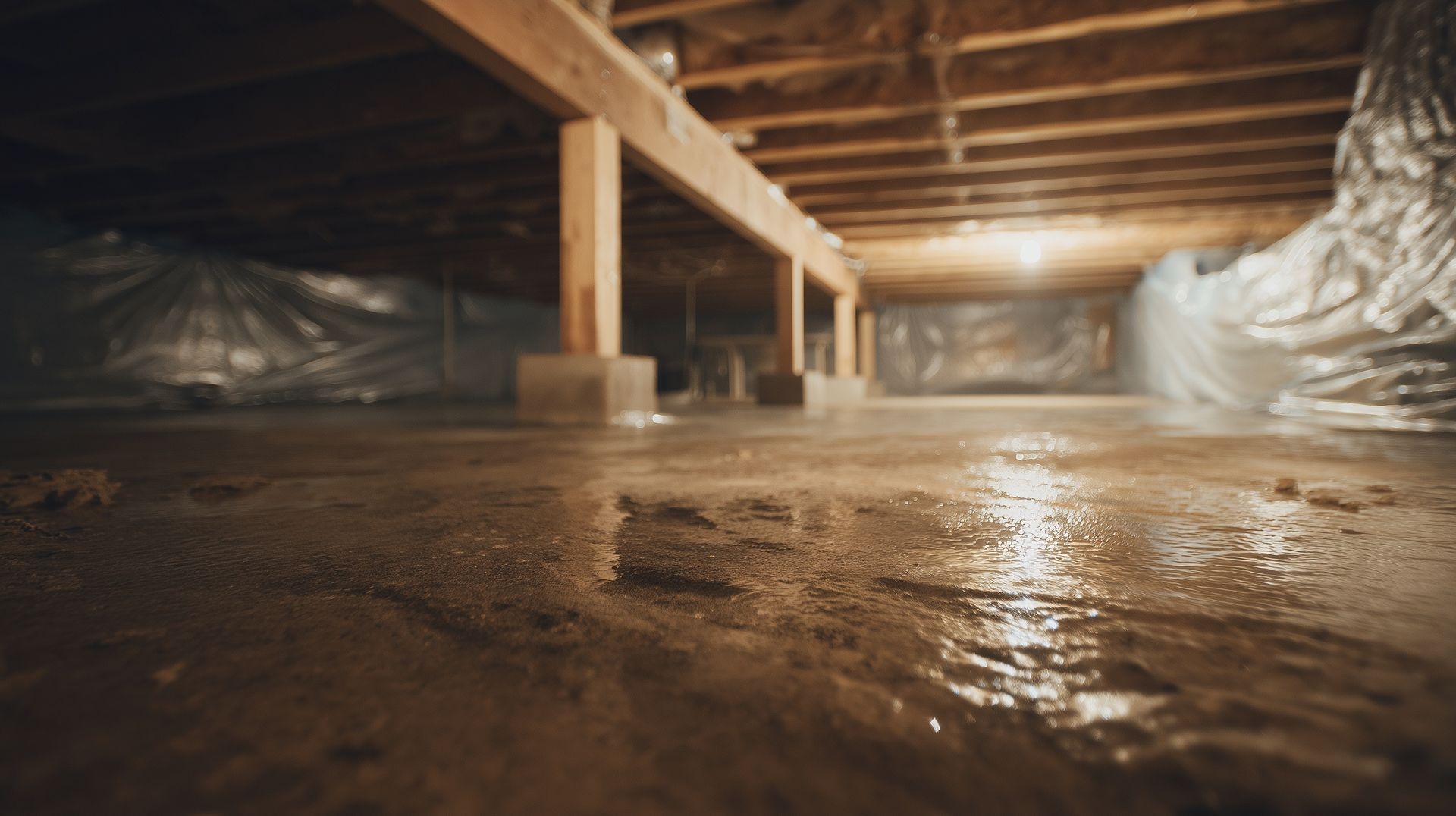
Every concrete slab contains moisture, and below-grade slabs are in continuous contact with soil that contains moisture at varying levels depending on season, drainage conditions, and the water table beneath the property. In Colorado, the seasonal moisture pattern creates specific basement coating challenges worth understanding.
Spring snowmelt and rain events saturate the soil around and beneath basement slabs during March through May, increasing the moisture content of the concrete and the vapor pressure driving moisture upward through the slab. Summer dry conditions reduce surface soil moisture but do not necessarily reduce the moisture content of the concrete itself, which retains moisture absorbed during the wet season. Fall rain events repeat the saturation cycle before the ground freezes.
This seasonal cycle means that a basement slab in Colorado experiences meaningful moisture variation throughout the year, and a coating applied during a dry period may be tested by the moisture pressure it was never designed to handle when wet season conditions arrive. A coating system that is not designed for below-grade moisture conditions will fail when that pressure builds, regardless of how well it appeared to be performing during the dry period when it was installed.
Colorado's clay-heavy soils in many Front Range communities retain moisture particularly well and maintain higher subsurface moisture levels than sandier soils even during dry periods. Homes in these soil conditions face elevated baseline moisture vapor transmission rates that make moisture-resistant coating specification more important than in regions with better-draining soils. Why choose polyurea for basement floor coatings covers the material selection considerations that apply specifically to below-grade applications where moisture is a persistent factor.
How Moisture Causes Coating Failure
Moisture-related coating failure in basements happens through two primary mechanisms that are worth understanding separately because they require different responses.
The first mechanism is hydrostatic pressure, which occurs when groundwater pressure builds against the underside of the basement slab and pushes moisture through the concrete with enough force to overcome the adhesion bond of a coating applied to the surface above. Hydrostatic pressure is most common in basements where the water table is high or where drainage around the foundation is inadequate, and it can push enough moisture through a slab to cause visible blistering and delamination in a coating that was otherwise properly applied.
The second mechanism is moisture vapor transmission, which is the movement of water vapor through the concrete from areas of higher moisture concentration to lower moisture concentration. Unlike hydrostatic pressure, moisture vapor transmission happens even when there is no standing water beneath the slab. It is a continuous process driven by the moisture differential between the soil and the interior environment, and it creates vapor pressure against the underside of any coating applied to the concrete surface.
A coating that is not permeable enough to allow moisture vapor to pass through it, and not adhesively strong enough to resist the vapor pressure building beneath it, will eventually blister and delaminate as the trapped vapor pressure finds the path of least resistance between the coating and the concrete. This is the failure mode that catches most homeowners by surprise because the coating appears fine until it suddenly and dramatically is not. What is moisture vapor transmission in concrete floors addresses the technical mechanisms of vapor transmission in detail for homeowners who want a deeper understanding of what drives this failure mode.
Moisture Testing Before Coating: Why It Is Non-Negotiable
The single most important step in a basement coating project that will perform over the long term is moisture testing before any coating product is selected or applied. Coating a basement floor without testing for moisture vapor transmission is the primary reason basement coating failures are so common.
Several testing methods are used to assess moisture conditions in concrete slabs before coating. The calcium chloride test measures the rate of moisture vapor emission from the concrete surface over a defined time period and expresses the result in pounds of moisture per 1,000 square feet per 24 hours. Most coating manufacturers specify maximum acceptable emission rates for their products, and coatings applied over concrete that exceed those rates will fail regardless of application quality.
The relative humidity probe test measures the relative humidity within the concrete slab itself by drilling holes to a specified depth and inserting calibrated probes that measure in-slab humidity after equilibration. This method provides a more accurate picture of the moisture condition within the slab than surface emission tests because it measures where the moisture actually is, rather than what is currently emitting from the surface.
Both testing methods provide information that is essential for making an informed coating system selection and for determining whether additional moisture mitigation steps are needed before coating application. A professional assessment that includes moisture testing is the foundation of a basement coating project that will perform as expected. Our process for concrete coating installation covers the assessment and preparation steps that professional installation requires before any coating system is applied.
Coating Systems That Resist Moisture-Related Failure
Not all coating systems are equally appropriate for below-grade applications where moisture vapor transmission is a factor. Understanding which systems are designed for these conditions and why helps homeowners evaluate their options with appropriate context.
Moisture-Tolerant Epoxy Systems
Moisture-tolerant epoxy formulations are specifically engineered to maintain adhesion at higher moisture vapor emission rates than standard epoxy systems. These products use modified chemistry that allows them to bond to concrete with elevated moisture content and to resist the vapor pressure that drives standard epoxy delamination. They are not moisture barriers but moisture-tolerant adhesive systems that perform within a defined range of moisture conditions rather than only in the dry conditions standard epoxy requires.
For basement slabs with moderate moisture vapor emission rates that fall within the product's specified tolerance range, moisture-tolerant epoxy systems provide a practical coating solution that performs durably without requiring more extensive moisture mitigation. The limitation is that they have defined tolerance thresholds and will fail if the moisture conditions exceed their specified range, which is why testing to confirm the slab's actual emission rate before product selection is essential.
Polyurea Coating Systems
Polyurea's flexibility is its primary advantage in basement applications where moisture conditions create stresses that more rigid coating systems handle poorly. The elastomeric properties of polyurea allow it to flex with minor concrete movement driven by moisture-related expansion and contraction rather than developing the stress cracks and edge lifting that rigid systems exhibit under the same conditions.
Polyurea systems also cure rapidly, which reduces the window during which the partially cured coating is vulnerable to moisture interference. Standard epoxy systems have longer cure windows during which rising moisture vapor can disrupt the curing chemistry and compromise the final coating adhesion. Polyurea's rapid cure reduces this vulnerability significantly. Why choose polyurea over epoxy for your basement makes the detailed case for polyurea systems in below-grade applications where moisture management is a design requirement.
Vapor Barrier Primers and Moisture Mitigation Systems
For basement slabs with moisture vapor emission rates that exceed what moisture-tolerant epoxy or standard polyurea systems can handle, a vapor barrier primer or dedicated moisture mitigation system applied before the decorative coating layer is the appropriate technical response. These systems are designed specifically to block or significantly reduce moisture vapor transmission through the slab, creating conditions above them that are within the acceptable range for standard coating systems.
Vapor barrier systems are more involved and more expensive than simply applying a coating directly to the slab, but they address the root cause of moisture-related coating failure rather than simply using a coating that tolerates some moisture. For basements with chronic moisture problems or high vapor emission rates, they are the approach that produces durable long-term results rather than another coating failure in two to three years.
The combination of a vapor barrier primer and a quality polyurea or epoxy topcoat system delivers the most robust moisture management for challenging basement conditions. The vapor barrier addresses the moisture transmission, and the quality topcoat system provides the durability, chemical resistance, and appearance the homeowner is looking for. Garage floor coatings benefits and best options covers the coating system options that apply across residential below-grade and slab-on-grade applications.
Drainage and Exterior Moisture Management
Coating system selection and moisture mitigation address the symptoms of basement moisture at the floor surface, but the most durable long-term solution for a basement with chronic moisture problems includes addressing the sources of that moisture from the exterior as well.
Downspout extensions that discharge roof water away from the foundation rather than directly at the foundation wall reduce the volume of water that enters the soil adjacent to the basement slab. Grading that slopes away from the foundation prevents surface water from pooling against the foundation and percolating down to the slab level. Functioning perimeter drainage systems around the foundation manage subsurface water before it reaches hydrostatic pressure levels against the slab.
These exterior moisture management steps do not replace the need for appropriate coating system selection and preparation, but they reduce the moisture load that the coating system has to manage and extend the practical life of even the best moisture-tolerant coating system. A professional coating installer who also evaluates the exterior drainage conditions around the home provides more complete advice about the total moisture management picture than one focused solely on the interior coating surface. Preparing your concrete floor for fall and winter in Denver covers the seasonal preparation steps that help Colorado homeowners protect their concrete investments through the wet season conditions that stress basement coatings the most.
Frequently Asked Questions About Basement Floor Coatings for Moisture Problems
How do I know if my basement has a moisture problem before getting a coating?
Several indicators suggest elevated basement moisture that should be tested before coating. White powdery deposits on the concrete surface, called efflorescence, are caused by water carrying mineral salts through the concrete and depositing them on the surface as the water evaporates. A musty smell in the basement indicates ongoing moisture presence. Visible dampness on the floor surface after wet weather events suggests active moisture transmission. If a previous coating has failed through blistering or delamination, moisture was almost certainly the cause. Professional moisture testing with calcium chloride or relative humidity probes provides quantitative data that guides coating system selection rather than relying on visual indicators alone.
Can I apply a coating over a basement floor that has had a previous coating fail from moisture?
Yes, but only after the failed coating is completely removed, the concrete surface is properly prepared, and the moisture condition is accurately assessed and addressed. Applying a new coating over a surface where the previous coating failed from moisture without addressing the moisture condition will produce the same failure in the new coating. Complete removal of the failed coating through grinding, accurate moisture testing, selection of an appropriate moisture-tolerant or vapor-barrier system, and professional preparation of the concrete surface are all required for the new coating to perform differently than the one it is replacing.
Is there a coating that will work regardless of how much moisture my basement has?
No coating system is appropriate for all moisture conditions. Every coating system has moisture tolerance limits, and basement slabs with extreme hydrostatic pressure or very high vapor emission rates may require dedicated waterproofing systems rather than standard floor coating approaches. For most residential basement situations in Colorado, the combination of accurate moisture testing, appropriate system selection, and vapor barrier primer, where needed, addresses the moisture condition effectively. For basements with severe moisture problems, an honest assessment of whether floor coating alone is the right solution, or whether more comprehensive waterproofing is needed first, is part of the professional evaluation.
Does a coated basement floor still need a dehumidifier?
A moisture-resistant coating system manages moisture at the floor surface but does not control the overall humidity level in the basement air. Basements that experience elevated humidity from moisture transmission through walls, rim joists, and other below-grade surfaces benefit from dehumidification regardless of floor coating condition. A properly coated floor reduces the contribution of floor-level moisture vapor to the basement humidity environment, but is not a substitute for mechanical dehumidification in basements where humidity control is needed for comfort, air quality, or storage protection.
How long does a moisture-resistant basement coating last?
A professionally installed moisture-tolerant or vapor-barrier coating system on a properly prepared basement slab with appropriate moisture assessment typically lasts ten to twenty years or more. The longevity depends on the accuracy of the moisture assessment, the appropriateness of the system selected for the actual moisture conditions present, the quality of surface preparation, and the ongoing moisture management of the space. A coating system that is correctly specified for the actual moisture conditions performs significantly longer than one that is marginally adequate for those conditions or one where the moisture conditions were not assessed before installation.
What is the best time of year to coat a basement floor in Colorado?
Late summer and early fall, after the spring and early summer wet season has passed and before fall rain events begin, represent a favorable window for basement coating in Colorado because subsurface moisture levels are typically at their seasonal low. This timing allows moisture testing to reflect conditions that are representative of the drier part of the seasonal cycle. Spring coating during the snowmelt season is generally less favorable because subsurface moisture levels are at their seasonal high. Regardless of timing, professional moisture testing at the time of installation provides the most accurate picture of actual conditions rather than relying on seasonal generalizations. Winter care for your Colorado garage floor covers the seasonal considerations that affect coating performance through Colorado's wet and cold seasons.
Stop Coating Over the Problem and Fix It for Good
A basement coating failure from moisture is almost always preventable with the right assessment, system selection, and preparation. Contact Keas Concrete Coatings for a free quote. Denver: 303-999-8121. Colorado Springs: 719-432-6490. Or request a quote online.