From Quote to Cure: What Actually Happens on Garage Floor Coating Install Day
A concrete coating is one of the few home improvements that starts and finishes between breakfast and dinner, which is exactly why homeowners have so little sense of what the day involves. You clear the garage, a crew shows up, and by evening the floor looks nothing like it did. What happens in between decides whether the coating is still bonded in five years. This is the hour by hour version of install day from Keas Concrete Coatings, written so you know what to expect before you sign anything.
The short overview of how we work lives on our concrete coating process page. What follows goes deeper: real hours, real cure windows, and the parts of the day nobody warns you about.
Before install day: the quote, the measurement, and the schedule
The visit before the install matters more than most people realize. A proper estimate includes a measurement of the actual coated area, not a guess from the driveway, plus a look at the slab itself. The estimator should be checking for cracks, pitting, spalling at the garage door line, previous coatings or sealers, oil saturation, and any sign of moisture movement through the slab.
Those findings change the day. A slab with heavy oil staining needs degreasing and possibly extra grinding time. Old sealer has to come off completely. Cracks and spalls get repaired during the install, but only if they were priced during the estimate. If nobody looked closely at your floor before quoting it, the number on the page is not really a quote.
Hour by hour: a standard single-day install
Times below describe a typical two- or three-car residential garage in the Denver metro. Larger floors, heavy repairs, or two-coat color builds can extend the schedule.
Arrival and setup, roughly one hour
The crew walks the floor with you, confirms the color and flake blend, and marks anything that needs attention. Plastic goes up across the garage opening and over any interior door, water heater, furnace, shelving, and outlets. Grinding produces a very fine dust, and containment is the difference between dust staying in the garage and dust ending up in your laundry room. Ask how the crew plans to protect the interior door threshold before work starts.
Mechanical grinding, two to three hours
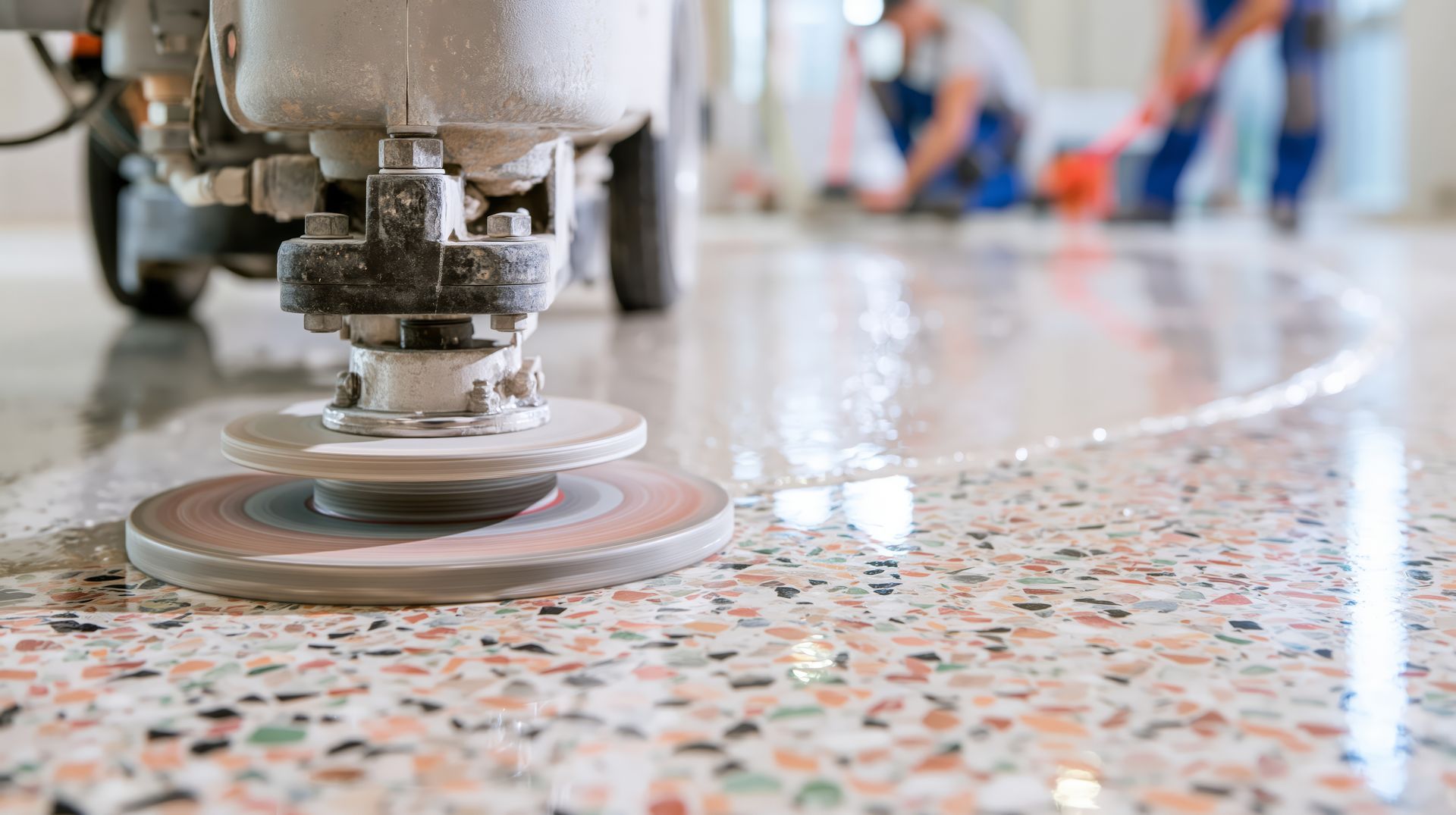
This is the loudest part of the day. Walk behind grinders with diamond tooling to open the surface of the concrete and pull off the smooth mill finish left by the original float and trowel work. Vacuums run continuously off the grinder shroud, and edges get cut in by hand around the perimeter, door pan, and any obstacles. Expect noise similar to a floor sander, and expect it to carry into the house.
Grinding is not just cleaning. It creates the surface profile that the coating mechanically keys into. If you want the full explanation of why this step decides the lifespan of the floor, that is covered separately in our post on diamond grinding versus acid etching.
Substrate repair, one to two hours
With the surface open, every defect becomes visible, including hairline cracks the previous finish hid. Cracks get chased out and filled, spalled areas get rebuilt, and control joints are treated according to the plan discussed at the estimate. Repair material needs its own short cure before coating goes over it, which is why this step sits in the middle of the day rather than at the start. The sequence and the material choices are explained in our guide to crack, spall and pitting repair before coating.
Base coat and flake broadcast, one to two hours
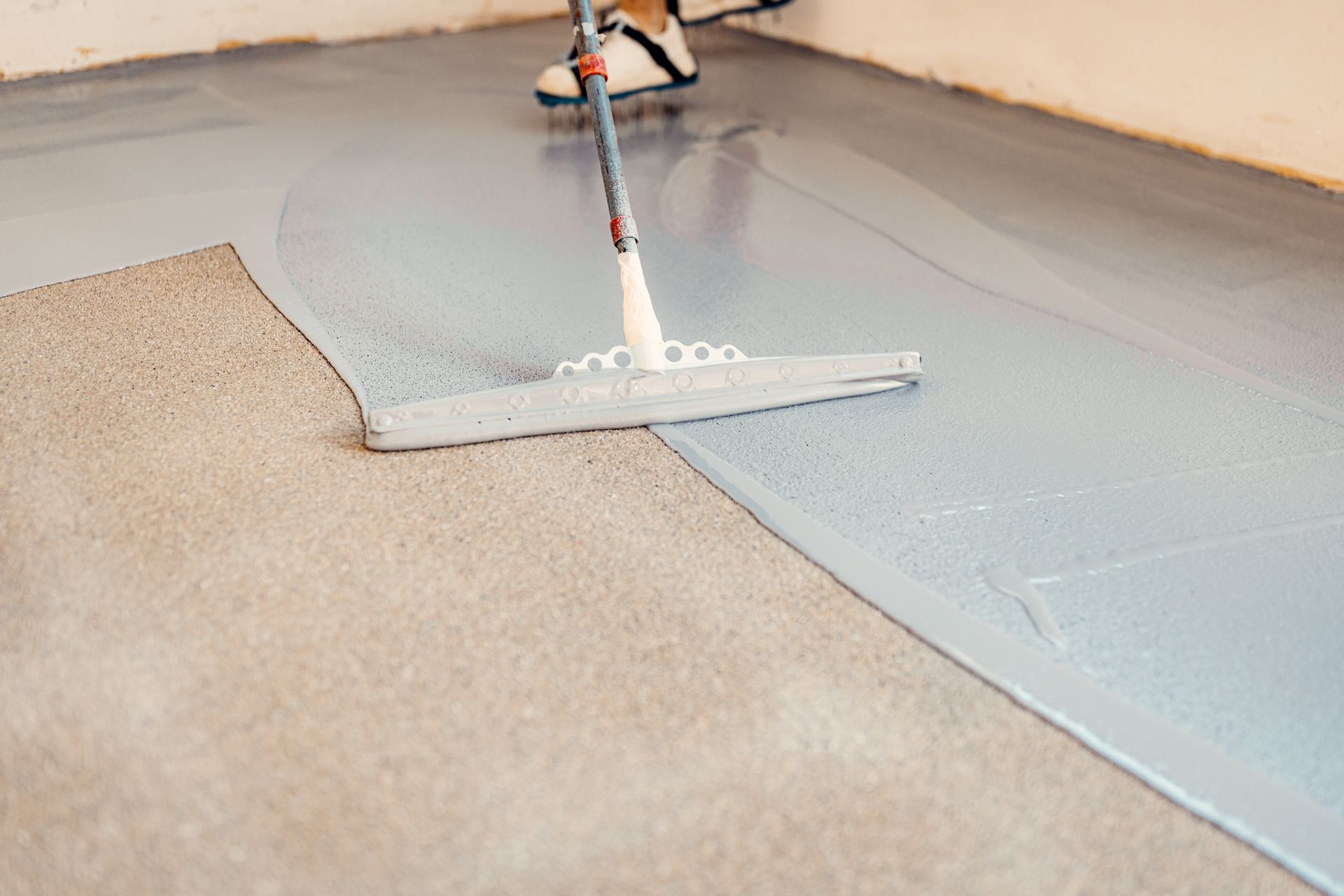
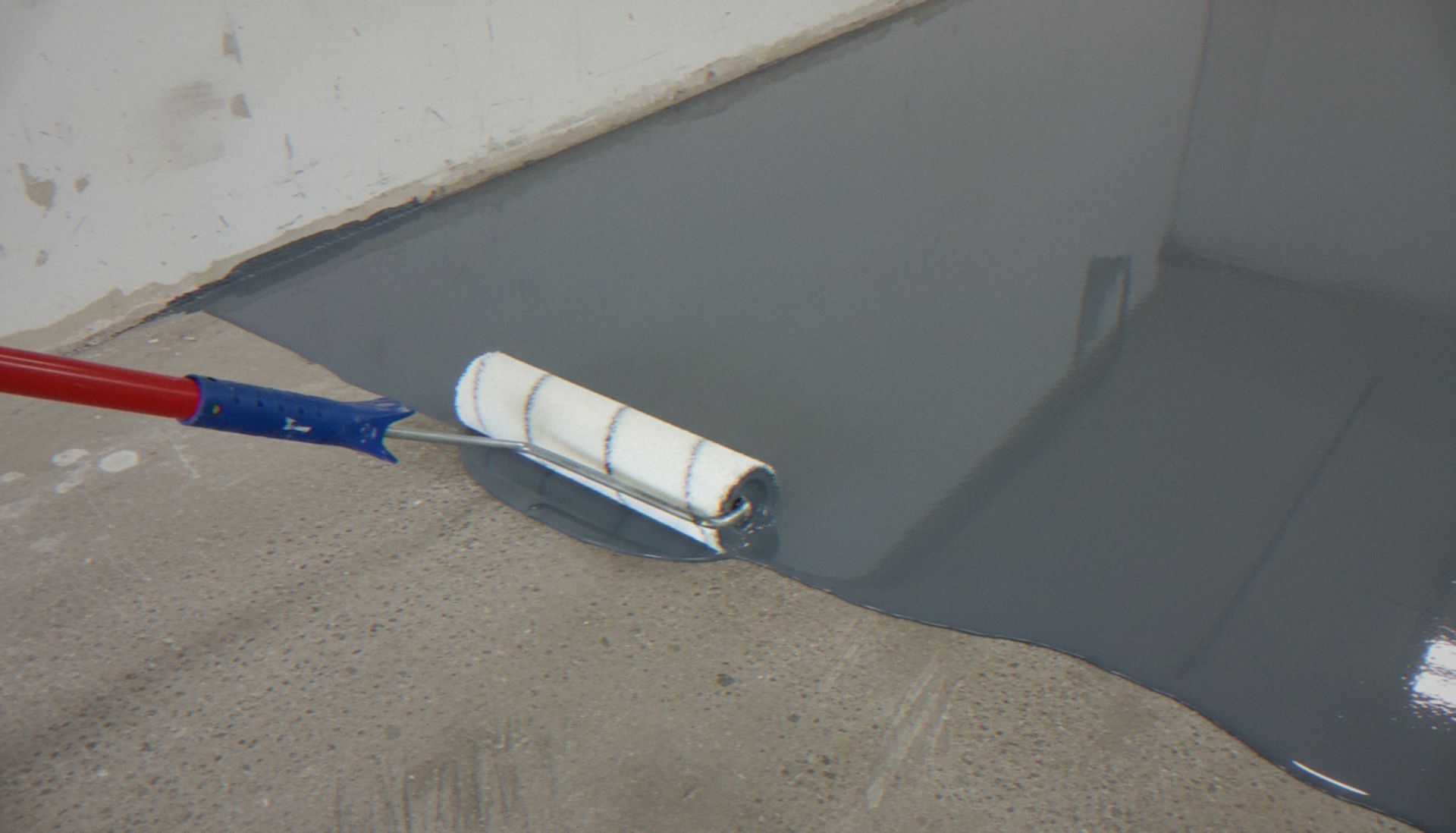
The base coat goes down in sections, and the flake is broadcast into it by hand while it is still wet. Broadcasting to refusal, meaning the floor is saturated until flake stops landing in wet material, is what produces an even field with no thin spots. This part looks chaotic and moves fast, because the working time of the material is measured in minutes, not hours.
Scrape, vacuum, and prep for topcoat, one to two hours
Loose flake gets scraped back and vacuumed, which smooths the profile and recovers material. The floor at this stage looks matte and rough. It is supposed to.
Topcoat, roughly one hour
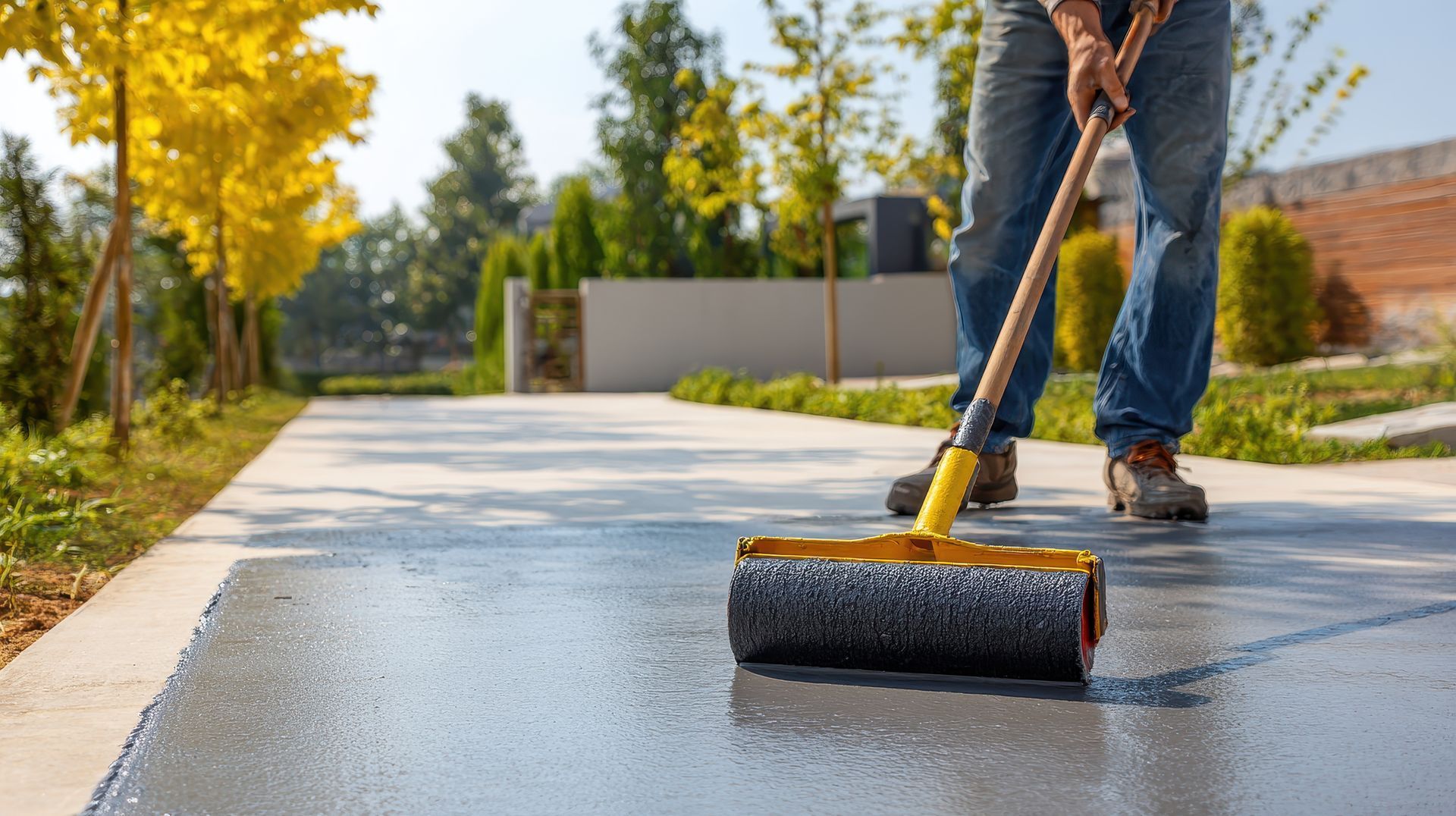
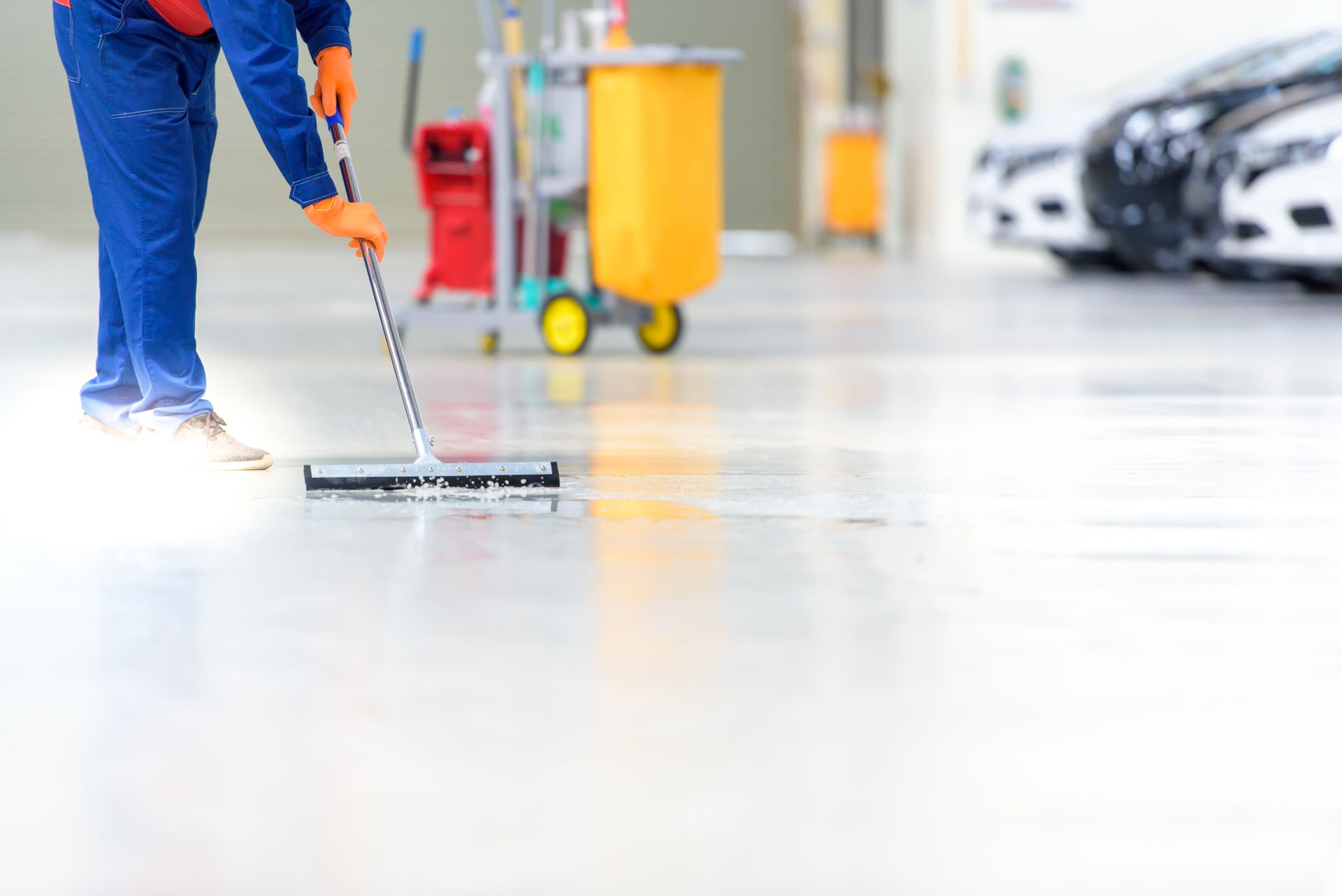
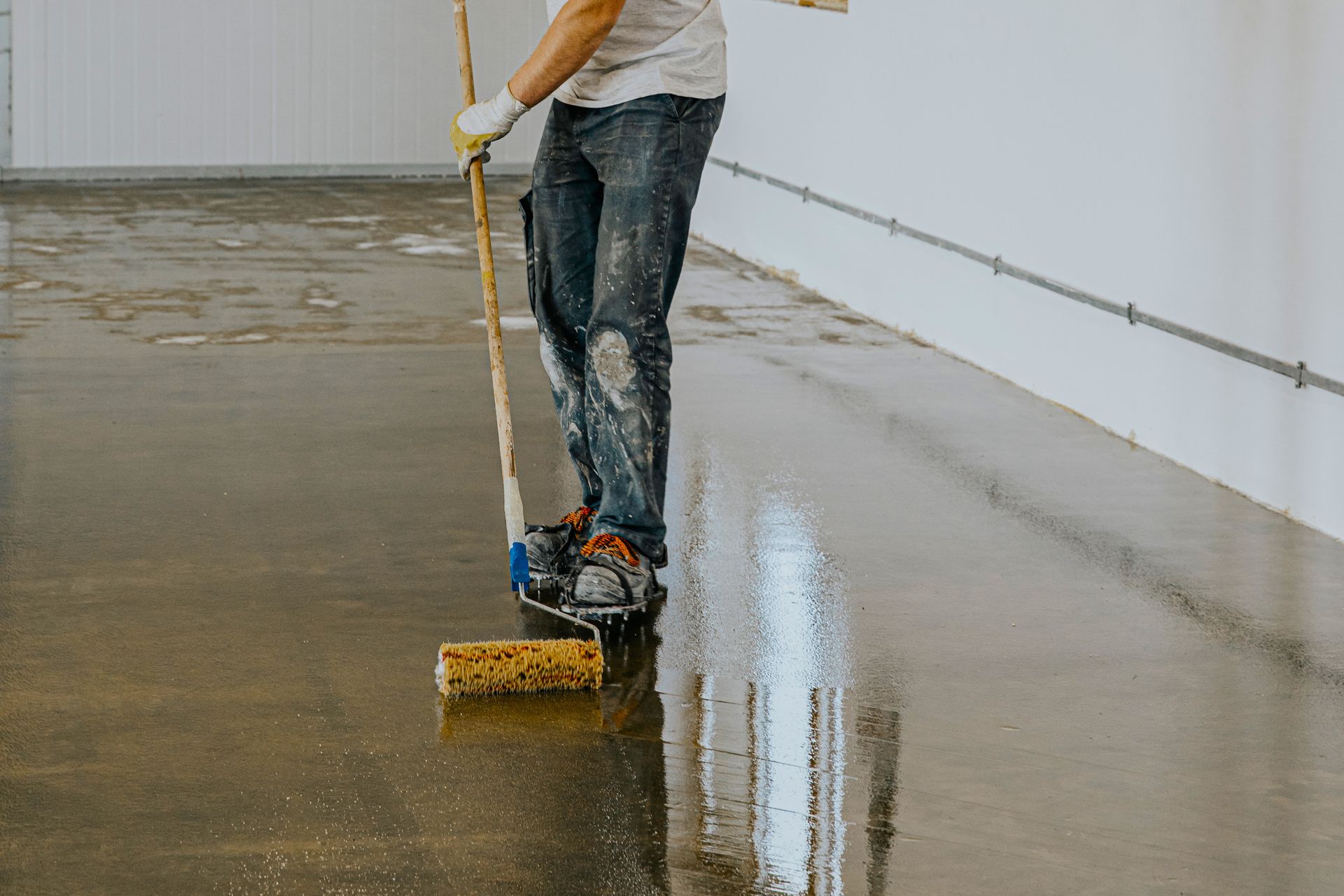
The clear topcoat is squeegeed and back-rolled over the flake. This is the layer that carries the gloss, the chemical resistance and the abrasion resistance. Once it is down, the crew pulls containment, cleans up, and the floor is off limits until it cures.
Cure windows: when you can walk on it, and when you can park on it
Cure time is where expectations most often go wrong. Foot traffic and vehicle traffic are two different thresholds, and the gap between them is not optional.
Light foot traffic is generally possible the same evening or the next morning. Vehicle traffic needs longer, because tires apply concentrated pressure and heat to a coating that is still developing its final hardness. Driving on a floor too early is one of the most common causes of early damage, and it is entirely preventable.
Temperature changes both numbers. Cold slabs slow the chemistry down, and a garage that sits at forty degrees overnight will not behave like one that sits at seventy. Your crew should give you specific return-to-service times for your install, in writing, based on the products used and the conditions that day. If nobody gives you a number, ask before the truck leaves. The material side of that chemistry is covered in our overview of polyurea and polyaspartic coating systems.
What has to come out of the garage first
Everything on the floor has to go, and more than most people expect. That includes vehicles, obviously, but also shelving units that sit directly on the slab, bikes, trash bins, freezers, tool chests and anything stored along the wall. Wall-mounted cabinets can usually stay. Items on the floor cannot, because the crew needs to grind and coat wall to wall.
Plan the staging the day before. A driveway works if the weather cooperates. If it does not, a corner of the yard with a tarp beats trying to move a chest freezer at seven in the morning. You also need the garage door available all day, so park the vehicles somewhere you can still reach them.
Noise, dust, and odor, honestly
Grinding is loud for two to three hours. Dust containment is good but not perfect, so wipe down surfaces in adjacent rooms afterward if anyone in the house is sensitive. Odor depends entirely on the products used. Fast cure polyurea and polyaspartic systems generally have far less solvent than traditional solvent-borne epoxy, which matters most in winter when the house is sealed up.
If you have young kids, pets, or anyone with respiratory sensitivity, raise it at the estimate so the crew can plan ventilation and re-entry timing around it.
How late in the year can you still install in Colorado?
This is the question that drives most October phone calls in the Front Range, and the honest answer is that the calendar matters less than the slab temperature.
Coating chemistry reacts to the temperature of the concrete, not the air temperature on the weather app. An attached garage holds heat from the house and stays workable far later in the year than an unheated detached shop. Polyaspartic and polyurea systems have meaningfully wider cold weather application windows than standard epoxy, which is why winter installs are routine here rather than exceptional.
Practically, the limits are these. The slab has to be above the minimum application temperature for the products, and it has to stay there through the cure. Snow and slush tracked into a garage before the coating cures is a real problem, so the vehicle stays out longer in winter.
And scheduling gets tighter in late fall, because everyone who meant to do it in September calls in November. If you are weighing timing, our guide to preparing your concrete floor for fall and winter in Denver covers the seasonal side in more detail.
Frequently asked questions about concrete coating installation
How long does a garage floor coating take?
Most standard residential garages are ground, repaired, coated and topcoated in a single working day. Extensive substrate repair, very large floors or specialty systems can push into a second day, and your estimator should tell you that before you book rather than on the morning of the install.
Can the whole job really be done in one day?
Yes, for most residential floors, because fast-cure polyurea and polyaspartic materials return to service in hours rather than days. The full case for that approach is laid out in our post on one-day garage floor coating in Denver.
Do I need to be home during the install?
You should be there at the start to confirm color and walk the floor, and at the end for the final walkthrough and care instructions. The middle of the day does not require you, although the garage needs to stay accessible.
What happens if it snows the day of my install?
Interior garage work continues in most winter weather, since the space is enclosed. What changes is vehicle return timing, because road salt and slush on a fresh coating are a bad combination. Exterior work is a different story and gets rescheduled.
Ready to see your install day on the calendar?
The best installs start with an estimator who actually looks at your slab. If you are in the Denver metro or anywhere along the Front Range and want a clear timeline for your specific floor,
request a free estimate from Keas Concrete Coatings, and we will walk your garage, price the repairs honestly, and give you a real return-to-service schedule before any work begins.